Real Scenarios.
Real Systems.
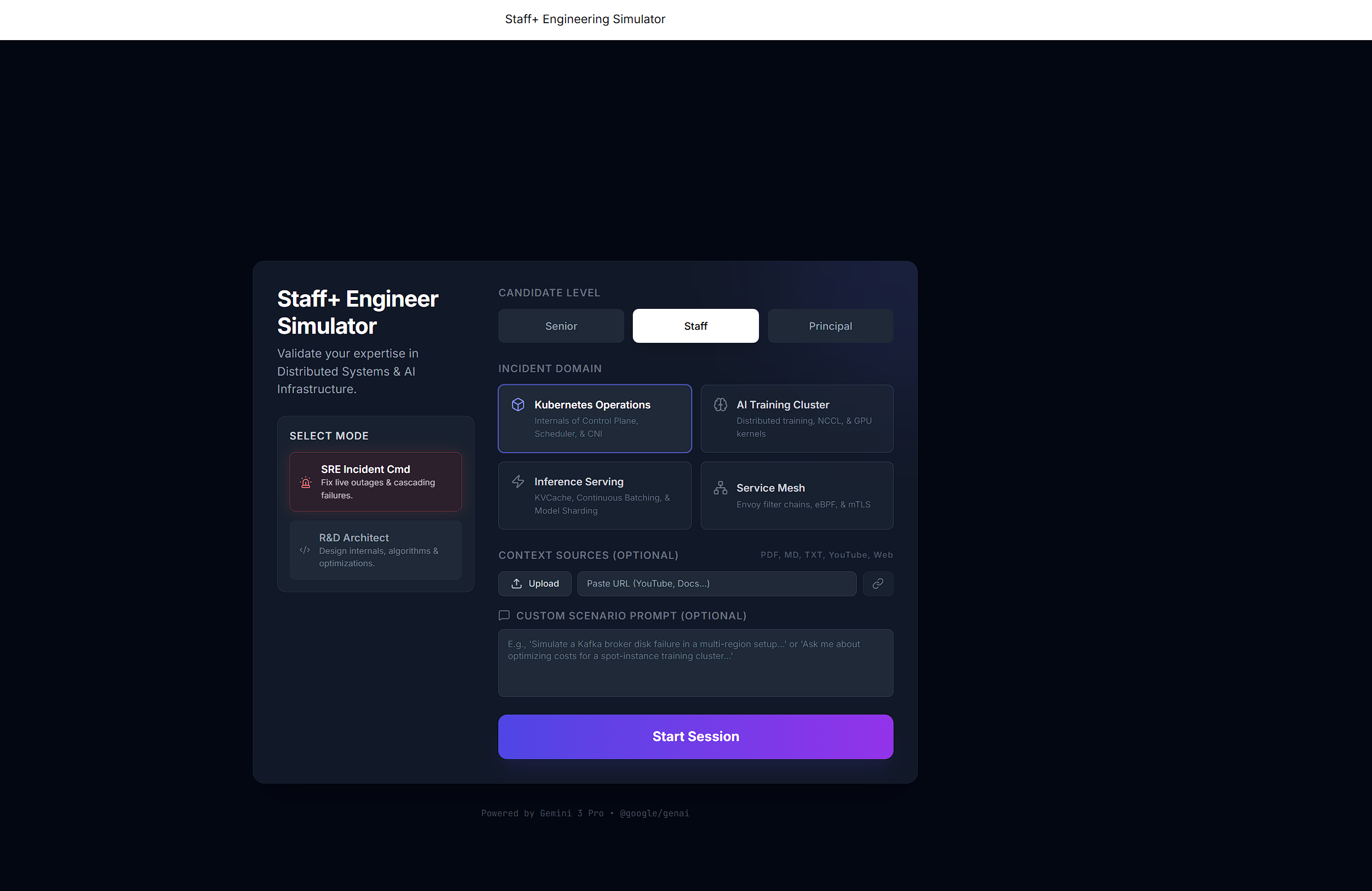
Zest is a hands-on simulation engine for practicing real-world engineering decisions — incident response, scaling failures, and distributed systems trade-offs.
Built for engineers who want to think like production operators.
Early Access unlocks extended platform access during private release.
Stop Guessing.
Start Architectural Thinking.
Most candidates fail System Design interviews not because they lack knowledge, but because they can't handle "The Pivot"—when the interviewer injects a real-world crisis mid-session.
Download our "10-Point Staff Engineer's Incident Checklist" (PDF) to learn:
- The Zero-Hour Assessment: How to prioritize data consistency vs. availability when a primary DB node dies.
- Cascading Failure Defense: 3 specific signals that tell you to trigger a circuit breaker before the entire mesh collapses.
- The Trade-off Framework: A mental model to justify your architectural decisions to Principal Engineers.
10-Point Staff Engineer's
Incident Checklist
by Zest Engineering
Built for Engineers Who Ship
Practice debugging outages, scaling bottlenecks, and architecture decisions with production-style context
Incident Response
Practice triaging cascading failures, debugging distributed systems, and making high-stakes decisions under production pressure.
System Design
Work through realistic architecture problems with real constraints — scale, cost, dependencies, and organizational complexity.
Production Thinking
Build the intuition that comes from operating real systems — without the 3 AM on-call stress or the blast radius.
Not Another Tutorial Platform
📚 Traditional Learning
- Isolated algorithm puzzles
- Unrealistic toy examples
- No system context
- Generic feedback
- Read-only learning
🍋 With Zest
- Real incident simulations
- Production-grade scenarios
- Full system architecture
- Expert-level AI mentorship
- Learn by doing
Everything You Need to Level Up
A complete training ground for real-world engineering challenges
Real Incident Simulations
Based on actual production incidents from top tech companies. Practice handling cascading failures, data inconsistencies, and performance degradations.
Expert-Level AI Mentorship
Get actionable feedback from our AI mentor. It evaluates your architectural calls as if a Principal Engineer were reviewing your design in real-time.
System Design Scenarios
Practice designing systems under realistic constraints — scale, cost, timeline, and organizational complexity all factored in.
Progress Tracking
Track your growth across different competency areas. Identify gaps and focus your practice where it matters most.
Start Practicing in Minutes
No setup required. Jump straight into real scenarios.
Choose a Domain
Pick a simulation domain — Kubernetes, service mesh, distributed databases, inference infrastructure, and more
Enter a Real-World Scenario
Work through production-style problems with real constraints: metrics, logs, dependencies, and cross-team dynamics
Get Structured Feedback
Receive detailed analysis of your decisions — trade-offs evaluated, alternatives explored, and patterns identified
Join the Private Release
Early Access members get extended platform access before public subscription.
15/100 Early Access seats activated. Public subscription launches soon.
Explorer Access
- ✓ All current simulation domains
- ✓ Full scenario library access
- ✓ Community Discord access
- ✓ All updates during access period
Best for trying the platform
Pro Access
- ✓ Everything in Explorer
- ✓ Early access to new domains
- ✓ Monthly engineering walkthrough (live)
- ✓ Priority feature voting
Best value for serious practice
Insider Access
- ✓ Everything in Pro
- ✓ Quarterly product roundtable
- ✓ Direct roadmap influence
- ✓ Async scenario review (2x)
Shape the product direction
Full platform access during private release
Help decide which domains we build next
Lock in before public subscription
Zest is not a course. It's an engineering simulation engine built to mimic real production systems.
What's Shipping Next
Early Access members get first access to new domains as they ship.
Frequently Asked Questions
Is this a course?
No. Zest is a self-serve simulation engine. There are no lectures, no videos, and no curriculum. You choose a domain, enter a scenario, and make decisions — just like you would in production.
What happens after Early Access?
Early Access includes 6 or 12 months of full platform access depending on your plan. After the private release period, Zest will move to a public subscription model. Early adopters lock in the best pricing.
Are the scenarios realistic?
Yes. Scenarios are built from real production patterns — Kubernetes orchestration, inference infrastructure, service mesh failures, distributed database incidents, and more. Every scenario includes real constraints: metrics, logs, dependencies, and team dynamics.
Can I get a refund?
Yes. We offer a 30-day refund policy. If Zest doesn't meet your expectations, we'll return 100% of your payment — no questions asked.
Ready to Start Practicing?
Join the private release and get full access to Zest's simulation engine before public launch.
Unlock Early Access →Or download the free guide to get started
Are you an EM or Tech Lead looking to train your team?
Apply for a Private Demo →Built by Engineers, for Engineers
We've been on both sides of the Staff+ interview table. We've seen talented engineers struggle—not because they lacked knowledge, but because they'd never practiced real architectural decision-making under pressure.
Zest was born from a simple belief: the best way to learn systems thinking is by doing it. Not reading about it. Not watching videos. Actually making decisions, seeing consequences, and learning from expert feedback.
Our scenarios are based on real incidents from production systems at scale. The kind of problems you'll face in Staff interviews and in your day-to-day work leading complex systems.
Practice Over Theory
Reading docs doesn't build intuition. Hands-on practice does.
Real-World Fidelity
Every scenario mirrors actual production incidents.
Community-Driven
Founding Members help shape what we build next.